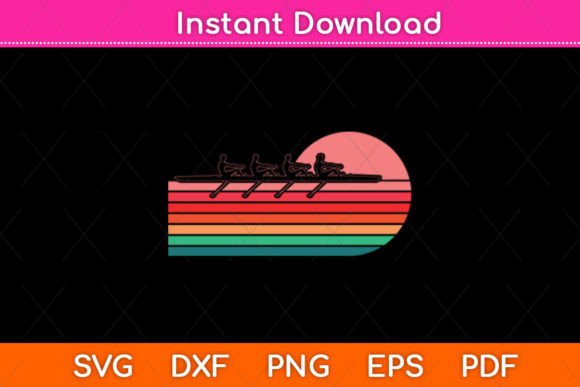
Vintage Team Rowboat Paddling SVG Design Review
As a professional embroidery digitizer and product reviewer, I approach every new graphic with a specific question: will this translate beautifully from screen to stitch? When evaluating the Vintage Team Rowboat Paddling Svg Design, my focus shifts immediately from its intended use as a print cut file for Cricut or Silhouette machines to its potential as a machine embroidery design. While this asset is marketed primarily for vinyl and sublimation, experienced makers know that clean vector graphics often serve as excellent foundations for digitizing. However, moving from a flat graphic to a textured, thread-based medium requires careful consideration of stitch density, fabric texture, and structural integrity.
Translating Vector Lines to Stitch Paths
The first impression of the Vintage Team Rowboat Paddling Svg Design is one of nostalgic charm and rhythmic movement. The vintage aesthetic typically implies bold lines, simplified shapes, and a cohesive color palette, all of which are favorable traits for embroidery. Unlike complex photographs or gradients, this style lends itself well to distinct stitch types. As I analyze the layout, I am looking for areas that can be converted into satin stitch borders versus fill stitch interiors. The rowboat’s hull and the paddlers’ silhouettes likely offer solid shapes perfect for tatami or bean fills, while the oars and water ripples may require precise running stitch or satin columns.
For craft business owners and Etsy sellers, this visual personality suggests a high-value handmade product. It evokes feelings of teamwork, tradition, and outdoor leisure, making it emotionally resonant for buyers. However, because this is originally a digital embroidery file intended for cutting machines, you must verify the line thickness. Lines that are too thin in an SVG might disappear when stitched, while overly thick blocks could result in excessive stitch density that puckers lightweight fabrics. Before committing to a full production run, I always recommend creating a black and white mockup to visualize where the needle penetrations will occur, ensuring the vintage detail remains legible once rendered in thread.
Real-World Application: The Custom Tote Bag Test
To truly judge the viability of this design, let us consider a real-life scenario: creating a custom embroidered tote bag for a rowing club fundraiser or a boutique summer collection. Tote bags are a staple small shop product, but canvas and linen textures present unique challenges. In this context, the Vintage Team Rowboat Paddling Svg Design needs to hold its own against a coarse weave.
If I were digitizing this for a tote bag, I would prioritize stability. The horizontal orientation of a rowboat scene demands adequate stabilizer to prevent the fabric from shifting during the wide stitching passes. I would test the design on scrap canvas first, checking if the oars remain straight and if the vintage text (if included) stays crisp. For a sweatshirt embroidery project, the considerations change entirely. Fleece and French terry are stretchy and prone to sinking stitches. Here, I might add a topping or increase the underlay to ensure the paddling figures do not get lost in the fabric pile. This practical adaptability is what separates a generic graphic from a viable commercial embroidery asset.
Navigating Fabric Limitations and Hoop Constraints
Not every surface is suitable for this specific artwork. Because the Vintage Team Rowboat Paddling Svg Design features linear elements like oars and boat edges, it requires careful placement on curved surfaces. Embroidering this on a structured cap can be risky; the horizontal span of a rowboat often exceeds the safe stitching area of a standard cap frame, leading to distortion at the edges. Similarly, highly textured fabrics like terry cloth or boucle may obscure the finer details of the paddles or facial features.
Small hoop sizes also warrant caution. If you attempt to shrink this design down for baby embroidery or a pocket logo, verify that the smallest details remain open. A vintage illustration that looks charming at 5 inches wide may become a dense, unrecognizable blob at 2 inches. Always check the minimum recommended size before resizing. For dark fabrics, remember that vintage designs often rely on negative space. You may need to adjust thread colors or add a light background fill to maintain contrast and recognition. Without these adjustments, the design assets lose their impact, and the finished product fails to meet customer expectations.
Elevating Product Value Through Technical Precision
Using the Vintage Team Rowboat Paddling Svg Design effectively can significantly enhance the perceived value of your inventory. Customers associate clean registration, appropriate density, and thoughtful placement with professionalism. When this design is executed correctly, it transforms a basic apparel item or home decor piece into a personalized gift with narrative weight. Whether used for holiday embroidery on stockings or as a branded element for a rowing team, the consistency of the stitch-out builds brand trust.
For digital product sellers offering printable mockups or design assets, showcasing this graphic in realistic embroidery contexts helps buyers visualize the end result. However, transparency is key. Clearly communicate whether you are selling the raw SVG for cutting or a fully digitized embroidery file. Confusion here leads to returns and negative reviews. If you are using the SVG to create your own embroidery patterns for sale, ensure your licensing allows for derivative commercial embroidery work. Respecting intellectual property protects your craft business reputation just as much as quality stitching does.
Essential Designer Notes for Success
Before loading this design into your machine or listing it in your shop, adhere to these practical checkpoints:
- Verify File Compatibility: Confirm whether you have received a pre-digitized embroidery file or just the vector SVG. These require different workflows and software.
- Test Stitch Density: Run a sample on your intended fabric. Adjust pull compensation if the boat hull distorts or gaps appear between stitch sections.
- Check Thread Contrast: Vintage palettes can sometimes be low-contrast. Ensure thread colors distinguish the paddlers from the boat and the water clearly.
- Stabilizer Selection: Match your stabilizer to the fabric weight. Use cut-away for stretchy knits and tear-away for stable wovens like canvas.
- Inspect Small Details: Look closely at the oar handles and any text. If they are thinner than 1mm in the graphic, they may need manual digitizing adjustments to stitch out cleanly.
- Review Licensing: Double-check terms regarding commercial use, especially if modifying the SVG to create a new embroidery file for resale.
- Mockup Testing: Create previews on both light and dark backgrounds to ensure the design reads well across various product options.
The Vintage Team Rowboat Paddling Svg Design holds immense promise for makers who understand the bridge between digital art and textile craft. By treating it not just as a picture, but as a blueprint for thread, you unlock its full potential. Whether you are producing custom apparel, designing an embroidered patch, or curating a unique Etsy listing, success lies in respecting the technical realities of embroidery. Take the time to test, adjust, and refine. Your customers will feel the difference in every stitch, and your handmade products will stand out for their quality and intentionality.