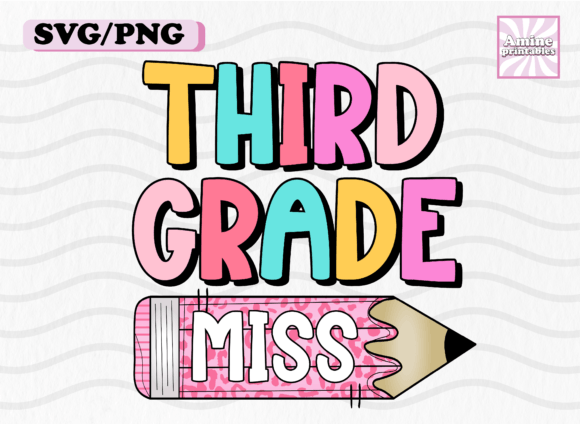
Third Grade School Girl Pencil Teacher Design Review
As a professional embroidery digitizer and product reviewer, I approach every new machine embroidery design with a critical eye. It is not enough for a graphic to look charming on a screen; it must translate effectively into thread, tension, and fabric interaction. When evaluating the Third Grade School Girl Pencil Teacher design, my primary focus is on its viability for real-world production. This review stems from the perspective of a maker preparing inventory for the back-to-school season, specifically looking at how this artwork performs when stitched onto retail-ready items like tote bags and teacher appreciation gifts.
First Impressions and Visual Hierarchy
Upon opening the embroidery file, the immediate impression is one of nostalgic academic warmth. The composition balances the playful energy of a third-grade student with the structured authority of a teacher figure, anchored by the pencil motif. For a handmade product, this visual storytelling is crucial. Customers do not just buy stitches; they buy the emotion attached to them. The layout appears optimized for vertical or square orientations, making it naturally suited for center-chest placement on apparel or the front panel of a canvas bag.
The design avoids overly complex gradients, which is a positive indicator for stitch clarity. In the Crafts category, designs that rely too heavily on photorealistic shading often fail during actual stitching due to excessive density. This Third Grade School Girl Pencil Teacher graphic seems to respect the limitations of thread, utilizing distinct color blocks rather than muddy transitions. This suggests it will maintain crisp edges and recognizable shapes even when viewed from a distance in a craft fair booth or an Etsy listing thumbnail.
Real-World Application: The Teacher Tote Bag Test
To truly evaluate this asset, I mentally placed it in a specific production scenario: creating a premium canvas tote bag for a "Teacher Survival Kit" bundle. This is a high-value item for any Etsy seller or small shop owner targeting the education niche. Canvas is a forgiving but textured substrate that demands confident stitching.
In this context, the Third Grade School Girl Pencil Teacher design serves as the focal point. If the design includes text elements, legibility is paramount. On a tote bag, users are often moving, so the lettering must be bold enough to read quickly. If the design utilizes satin stitch columns for outlines or text borders, they must be wide enough to prevent fabric puckering but narrow enough to avoid tunneling. Based on the visual structure, this design likely pairs well with a tear-away or cut-away stabilizer to maintain the integrity of the canvas weave. The pencil element provides a strong linear anchor, which helps stabilize the surrounding fill areas during the embroidery process.
For custom apparel like sweatshirts or t-shirts, the design’s weight matters. A heavy, dense design on a lightweight jersey knit can cause sagging. However, if this file uses efficient fill stitch patterns and appropriate underlay, it should drape well without distorting the garment. This makes it a versatile candidate for both structured items like caps and softer goods like baby clothes, provided the size is scaled appropriately.
Navigating Fabric Challenges and Technical Limits
No digital embroidery file is universally perfect across all substrates. When planning to use Third Grade School Girl Pencil Teacher, you must consider where caution is required. Detailed facial features or tiny accessories common in school-themed graphics can become problematic on highly textured fabrics like terry cloth or fleece. The pile of the fabric can swallow fine details, turning a charming face into an unrecognizable blur. In such cases, using a water-soluble topping is non-negotiable to keep the stitches sitting on top of the texture.
Stretchy fabrics present another challenge. If you are applying this design to performance wear or ribbed knits, the tension between the hoop size and the fabric elasticity must be managed perfectly. Over-tightening can distort the circular or oval elements of the pencil or character proportions. Always test on a scrap piece of the exact fabric you intend to use. Additionally, dark fabrics require careful consideration of thread colors. If the original design relies on subtle shading that disappears against navy or black cotton, you may need to adjust the palette to higher contrast tones to ensure the Third Grade School Girl Pencil Teacher remains visible and impactful.
Be mindful of curved surfaces. While the description mentions suitability for mugs and tumblers, remember that standard flat-bed embroidery machines cannot stitch directly onto hard cylindrical objects unless you have a specialized rotary attachment. If you are a craft business owner offering sublimation or vinyl decals alongside embroidery, verify whether this purchase includes compatible formats for those mediums, or if it is strictly a Graphics asset for digital printing and embroidery digitizing.
Commercial Value and Brand Consistency
For entrepreneurs selling personalized gift items, consistency builds trust. Using the Third Grade School Girl Pencil Teacher design across multiple product lines—matching stickers, cards, and embroidered patches—creates a cohesive brand identity. However, scalability is key. A design that looks beautiful at 5x7 inches might lose its charm at 2x2 inches. Before committing to mass production of smaller items like pocket logos or sleeve accents, verify that the smallest details hold up at reduced sizes. You may need to remove minor decorative elements or simplify running stitches to maintain clarity in miniature versions.
The perceived value of your finished product hinges on execution. Clean jumps, trimmed threads, and proper registration elevate a simple graphic to a boutique-quality item. When photographing your work for printable mockups or online listings, ensure the lighting captures the texture of the stitches. Flat, over-edited images can mislead customers about the tactile nature of embroidery. Showcasing the dimensional quality of the satin and fill stitches helps justify premium pricing and sets realistic expectations for buyers.
Essential Designer Notes for Success
Before loading this design into your machine for a client project or commercial run, adhere to these practical checkpoints:
- Verify Licensing: Confirm whether your purchase allows for commercial use of the finished physical products versus the digital file itself. Protecting your business means respecting intellectual property terms.
- Test Stitch Density: Run a sample on scrap fabric to check for stiffness. If the area feels bulletproof, the density may be too high for comfortable wear on baby embroidery projects or lightweight tees.
- Check Thread Contrast: View the design in black and white within your software. If elements blend together without color, they will lack definition in monochromatic embroidery or low-light photography.
- Stabilizer Selection: Match your backing to the fabric weight. Do not use heavy cut-away on sheer fabrics, and avoid light tear-away on unstable knits.
- Mockup Validation: Create digital previews showing the design on the actual product type (e.g., a curved mug vs. a flat card) to ensure the aspect ratio works visually before production.
- Format Compatibility: Ensure the provided file format matches your machine’s requirements. Never assume universal compatibility across different brands.
The Third Grade School Girl Pencil Teacher design holds significant promise for the back-to-school and teacher appreciation markets. Its thematic relevance and apparent structural balance make it a strong contender for commercial embroidery portfolios. By approaching this file with technical diligence and creative foresight, makers can transform a digital graphic into tangible, cherished keepsakes that resonate deeply with educators and families alike. Always prioritize testing and quality control to ensure your handmade creations reflect the professionalism your customers expect.