Don't Make Use of My Teacher's Voice: Design Review
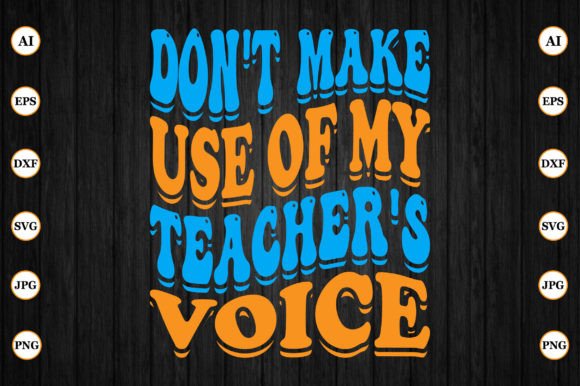
As a professional embroidery digitizer and product reviewer, I approach every new graphic with a specific question: will this actually stitch out well on fabric? When evaluating the Don t Make Use of My Teacher s Voice design, my first impression is that it captures a very specific, relatable humor that resonates deeply within the education community. Visually, the layout suggests a bold, typographic focus that is ideal for making a statement. However, transitioning from a digital graphic to a tangible machine embroidery design requires careful consideration of stitch types, fabric interaction, and end-use durability. This review breaks down how this specific teacher-themed asset performs when moved from screen to hoop.
Translating Digital Graphics to Stitched Reality
The product description identifies this as a digital download including AI, SVG, and PNG files, primarily marketed as cutting files for Cricut and Silhouette. For us in the embroidery space, these vector and raster assets serve as the foundational artwork for digitizing or tracing. The phrase "Don t Make Use of My Teacher s Voice" carries a weight that demands legibility. In my assessment, the visual personality of this text leans toward authoritative yet playful, which means the embroidery file you create or purchase based on this art must prioritize clarity over excessive ornamentation.
If you are using the included SVG to auto-digitize or manually trace for embroidery, pay close attention to the letter spacing. Text-based designs like this often fail when letters are too close together, causing thread breaks or a muddy appearance. Because this is categorized under Crafts and Graphics, ensure you are checking the licensing terms specifically for embroidery use if you intend to sell the finished custom apparel. The 450 DPI resolution mentioned for the PNG is excellent for creating printable mockups or tracing templates, but remember that high-resolution pixels do not automatically equal good stitch data. You must still define your satin stitch columns and fill stitch areas manually to ensure the humor lands correctly on the final product.
Real-World Application: The Teacher Tote Bag Test
To truly evaluate this design, I mentally placed it onto a canvas tote bag project intended for an end-of-year teacher gift. A tote bag design needs to withstand heavy use, washing, and the friction of carrying books. Canvas is a textured fabric, which can sometimes swallow fine details. For Don t Make Use of My Teacher s Voice, I would recommend avoiding tiny running stitch outlines. Instead, opt for a medium-weight satin stitch or a dense fill stitch for the lettering to ensure it pops against the canvas weave.
In this scenario, the design serves as both a functional label and a conversation starter. If stitching on a natural cotton canvas, using a dark navy or black thread provides necessary contrast. I also considered how this would look on a sweatshirt. Sweatshirt embroidery presents different challenges due to the stretchy knit fabric. Here, the design’s layout must be stabilized heavily to prevent puckering. The bold nature of the phrase allows for slightly wider column widths, which actually helps stability on knits. This makes the design versatile enough for both structured items like bags and softer garments like hoodies, provided you adjust your stitch density accordingly.
Navigating Fabric Limitations and Hoop Constraints
Not every surface is friendly to text-heavy embroidery projects. When planning to use Don t Make Use of My Teacher s Voice, you must be cautious with small hoop sizes. If the phrase is long, forcing it into a 4x4 hoop might require reducing the text size to a point where readability suffers. Always measure the actual stitch area before committing to a placement. If the design exceeds your hoop capacity, consider splitting the design or rearranging the text stack, ensuring you maintain the original graphic's intent.
Fabric texture plays a massive role in the success of this specific design. On smooth fabrics like quilting cotton or twill, the edges of the letters will remain crisp. However, on high-pile fabrics like terry cloth towels or fleece blankets, the stitches can sink in. For these applications, I strongly advise using a water-soluble topping stabilizer to keep the stitches on the surface. Without it, the witty message of Don t Make Use of My Teacher s Voice could get lost in the nap of the fabric. Additionally, be wary of curved surfaces like caps. Unless the design has been specifically digitized with cap compensation (distorting the text to account for the curve), flat typography can look warped on a hat. Test on a scrap cap first or stick to flat embroidered patch applications for headwear.
Commercial Viability and Customer Perception
For Etsy sellers and small shop owners, this design taps into a passionate niche. Teachers love personalized gear that acknowledges their profession with humor. However, customer trust relies on professional execution. A handmade product featuring this phrase must look intentional, not homemade in a negative sense. Ensure your thread tension is balanced so the bobbin thread doesn't show on top, especially if using white thread on dark fabric. Visual appeal directly correlates to perceived value; clean, dense stitching justifies a higher price point for commercial embroidery goods.
When listing this item, use the included high-quality PNG to create accurate printable mockup previews. Customers need to see how the design scales on different products. Show it on a mug, a shirt, and a bag to demonstrate versatility. Clearly state whether the item is a personalized gift option or a ready-to-ship product. Remember that while the source file is a digital download, your value add is the expert digitizing and stitching. Protect your business by verifying that your license allows for selling physical embroidered goods versus just the digital file itself.
Essential Technical Notes for Makers
Before you run a full production batch of Don t Make Use of My Teacher s Voice merchandise, adhere to these practical designer guidelines:
- Test Stitch First: Never skip the test sew-out. Use a fabric scrap that matches your final project’s weight and texture to check for registration issues.
- Verify Stabilizer Pairing: Match your stabilizer to the fabric, not just the design. Cut-away for knits, tear-away for wovens, and always use topping for textured surfaces.
- Check Thread Contrast: View your thread selection in natural light. What looks good on a backlit monitor may lack contrast on physical fabric.
- Inspect Small Details: If the graphic includes any decorative accents or punctuation, ensure they are large enough to stitch cleanly. Elements under 1mm may need to be removed or enlarged.
- Mockup Accuracy: Use the 450 DPI PNG to create realistic listings, but add a disclaimer that actual stitch colors may vary slightly from digital previews.
- Licensing Compliance: Re-read the included license file. Confirm if attribution is required or if there are limits on the number of physical sales allowed.
Ultimately, Don t Make Use of My Teacher s Voice is a strong candidate for teacher appreciation projects and boutique inventory. Its success lies in respecting the technical constraints of embroidery while leveraging the emotional connection of the message. By treating the source graphics as a blueprint rather than a final product, and by applying rigorous testing standards, you can transform this digital asset into a high-quality, sellable embroidered good that teachers will be proud to carry.